Shop
uest
On your mark, get set... Groceries! - Saving time and money with smart grocery shopping.
Role
Product design lead
Timeline
Nov - Dec 2024
6 weeks
Team
1 program manager
2 business analysts
1 technical specialist
Skills
Interaction design
UX research
Prototyping
Context

In fall of 2024, I participated in +Tech Innovation Jam+ - a 6-week competition hosted annually by University of Michigan’s Ross School of Business.
The program challenged us to partner with students from multidisciplinary background to create a Tech Solution that we care about.

Defining our problem space
Grocery shopping is painful when you’re a student, how can we make it better?
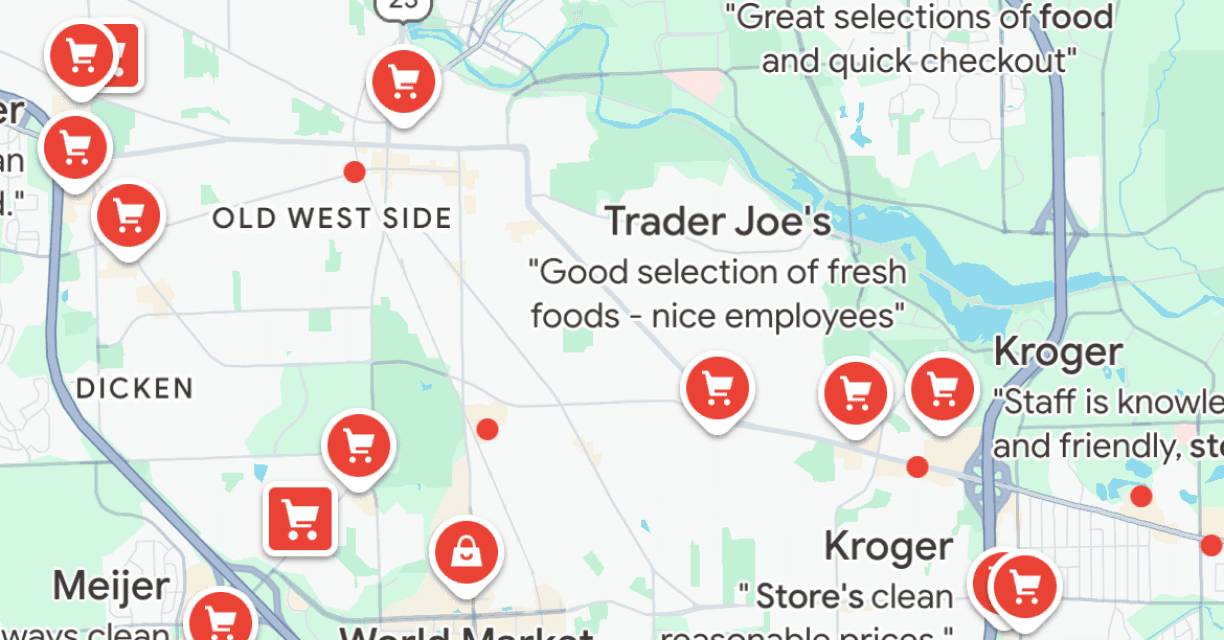
Major stores are usually located outside of towns.

Not everyone has personal vehicles to travel and carry their groceries.

Online shopping apps meant mark-up prices that are not budget-friendly.
How might we
“How might we help students navigate grocery shopping more efficiently considering time, budget, and access?”
Best Match Recomendation
Create a grocery list we will let you know which store you should go to.
Search your desired items and at them to a list, let ShopQuest recommends the best store based on your needs.
AI Route Suggestion
Don’t run back and forth around the store. Save time with AI route recommendation.
Guarantee Compensation Discount
A guarantee for your trip. Receive a compensation discount when you can’t find what you need.
Inventories change, but we want to ensure our app can ensure the best experience for our users.
But wait, how did we get here?
We originally hypothesized that students like ourselves usually miss items we need on our trips. Hence, an AI list reminder can help people avoid unnecessary trips back to the store.
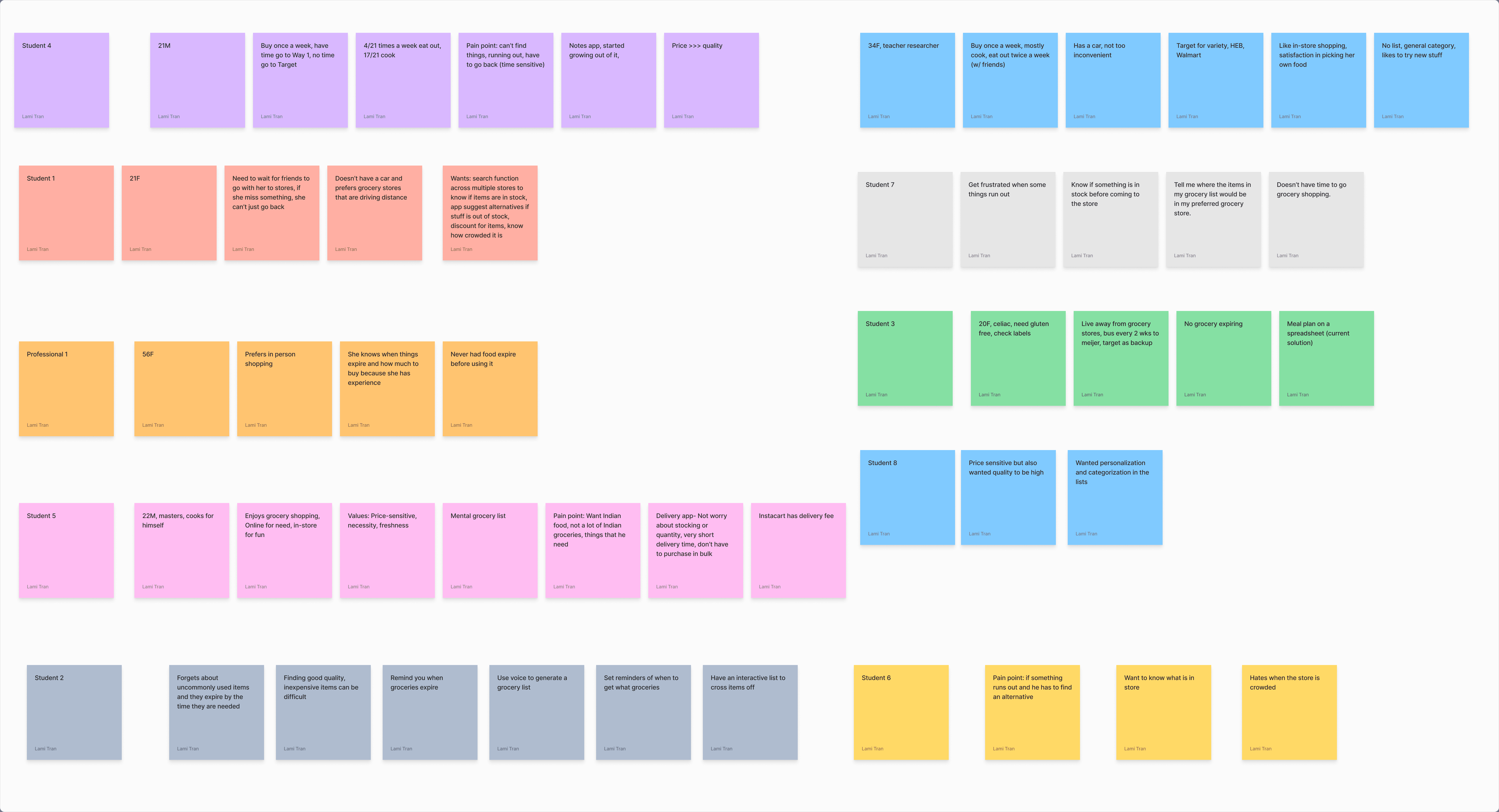
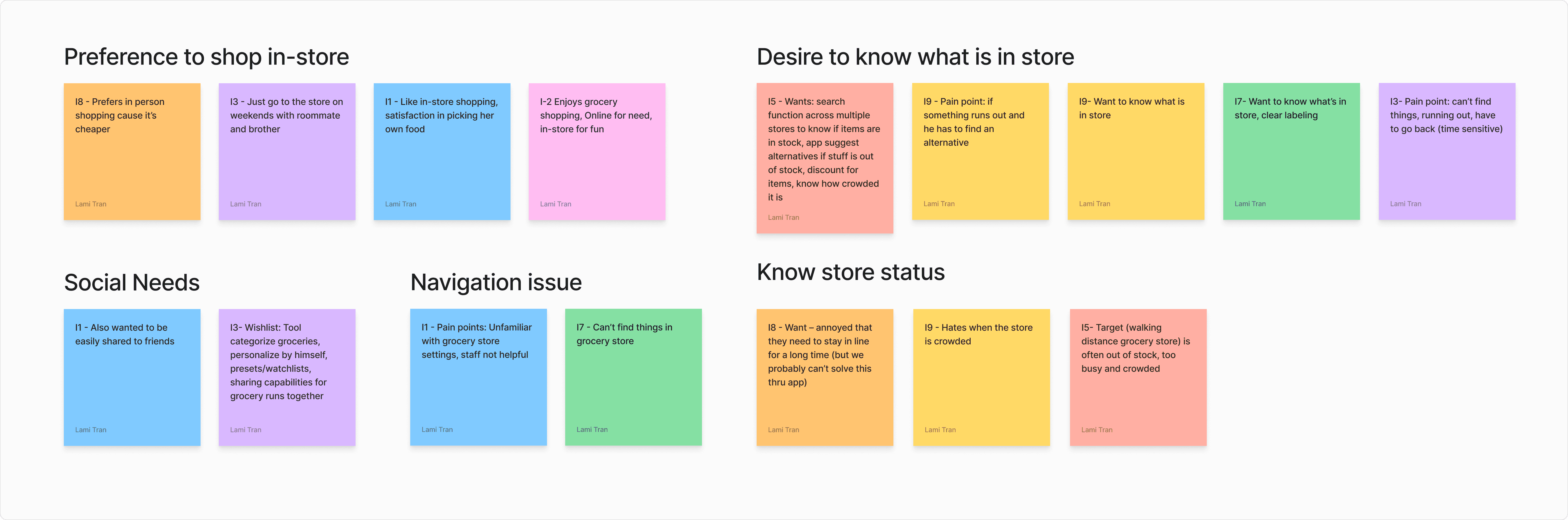
Interview affinity mapping
After interviewing 8 students and 3 working professionals, here's what our users have to say:
Interview insights
Why not order your groceries online?

“I don’t trust others to select my food, there is no guarantee they are getting the right items, not to mention the ones with longer expiration dates”
Is forgetting things on your list a problem?

“No. Usually I just buy the same 10 things, so I am pretty good at keeping a mental list.”
So, what’s the issue?
Can’t be sure if item is in stock.

“I just hate it when my favorite brand of yogurt ran out and I had to get another one, it’s just annoying.”
Trouble navigating a large store.

“One time I ran 2 rounds around the store to find green onions. It feels like things are never in the same place”
Thinking about the current shopping experience
It’s difficult to know what is in stock before going to the store. Online grocery delivery applications ask you to select the store before selecting your items.
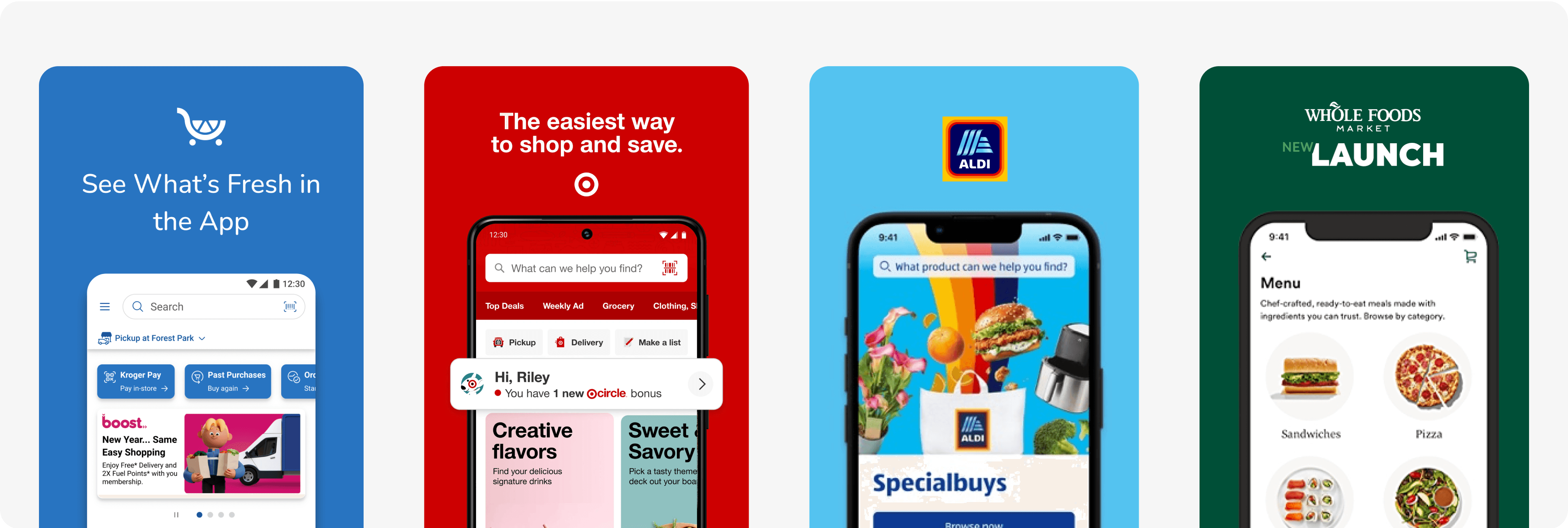
Common user journeys for online grocery shopping and inventory check
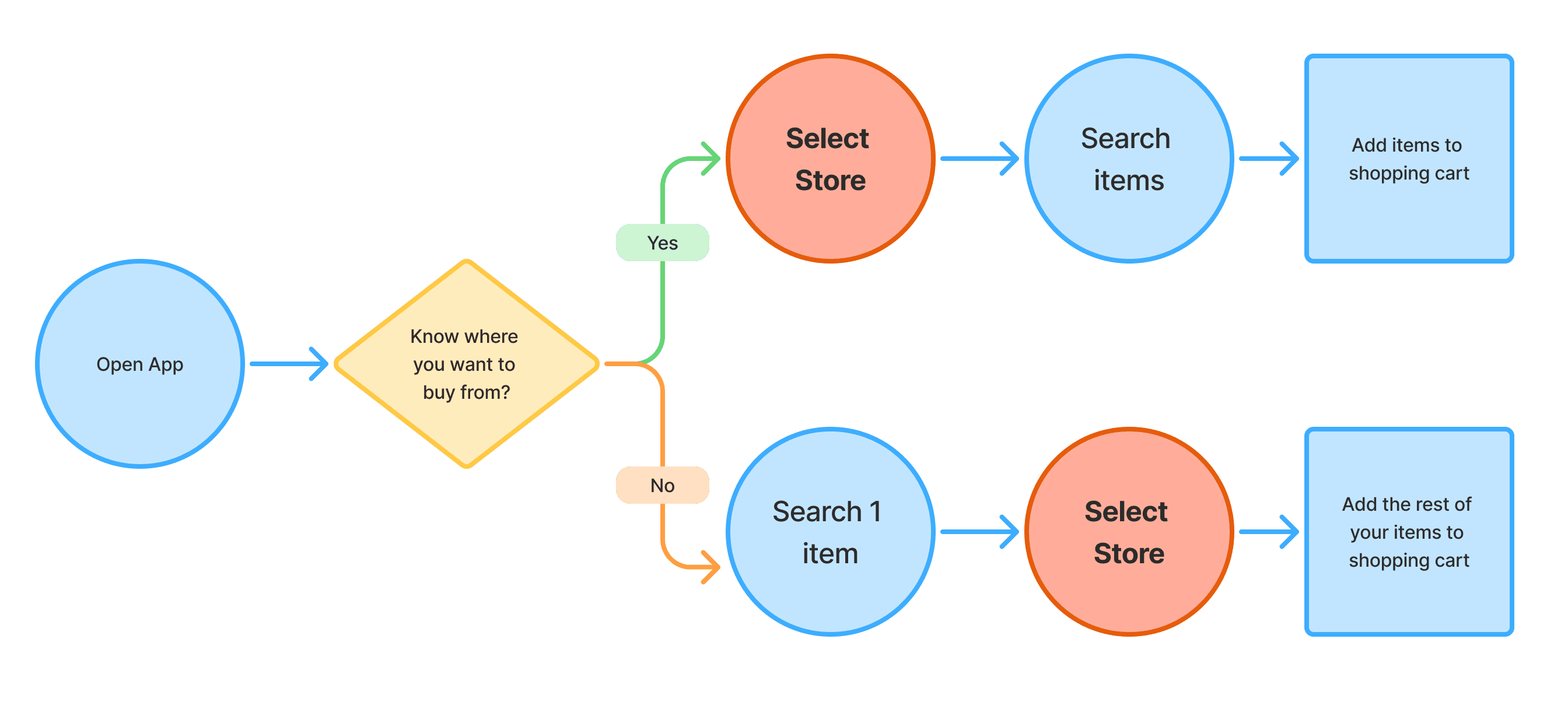
⚠️ Difficulty for budget-cautious users to compare prices.
⚠️ Difficulty for item-specific users to compare inventories.
The solution
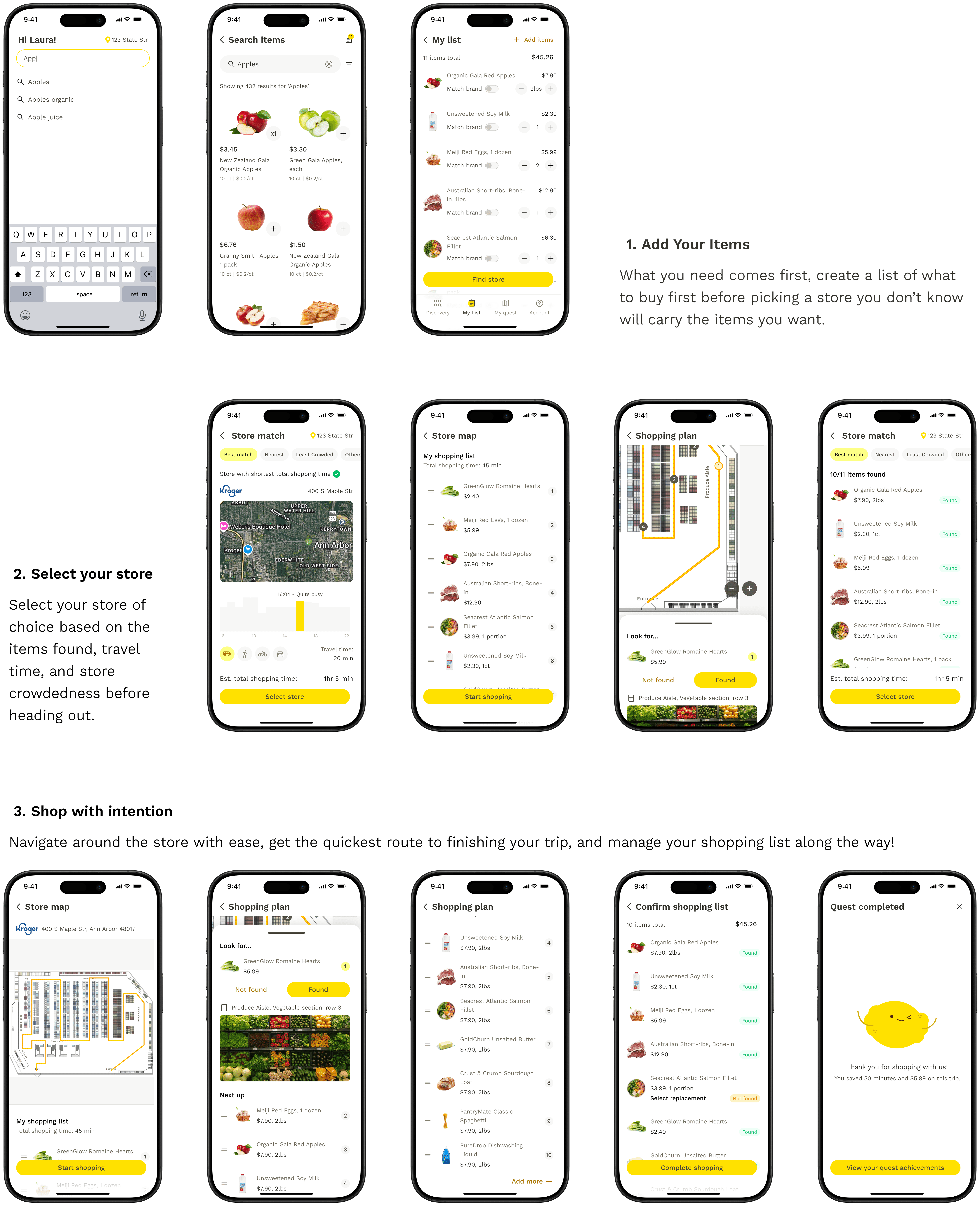
The Complete Flow For
An Efficient Grocery Quest
Design details
What do user want to see on a homepage? Displaying store statuses on an interactive map.
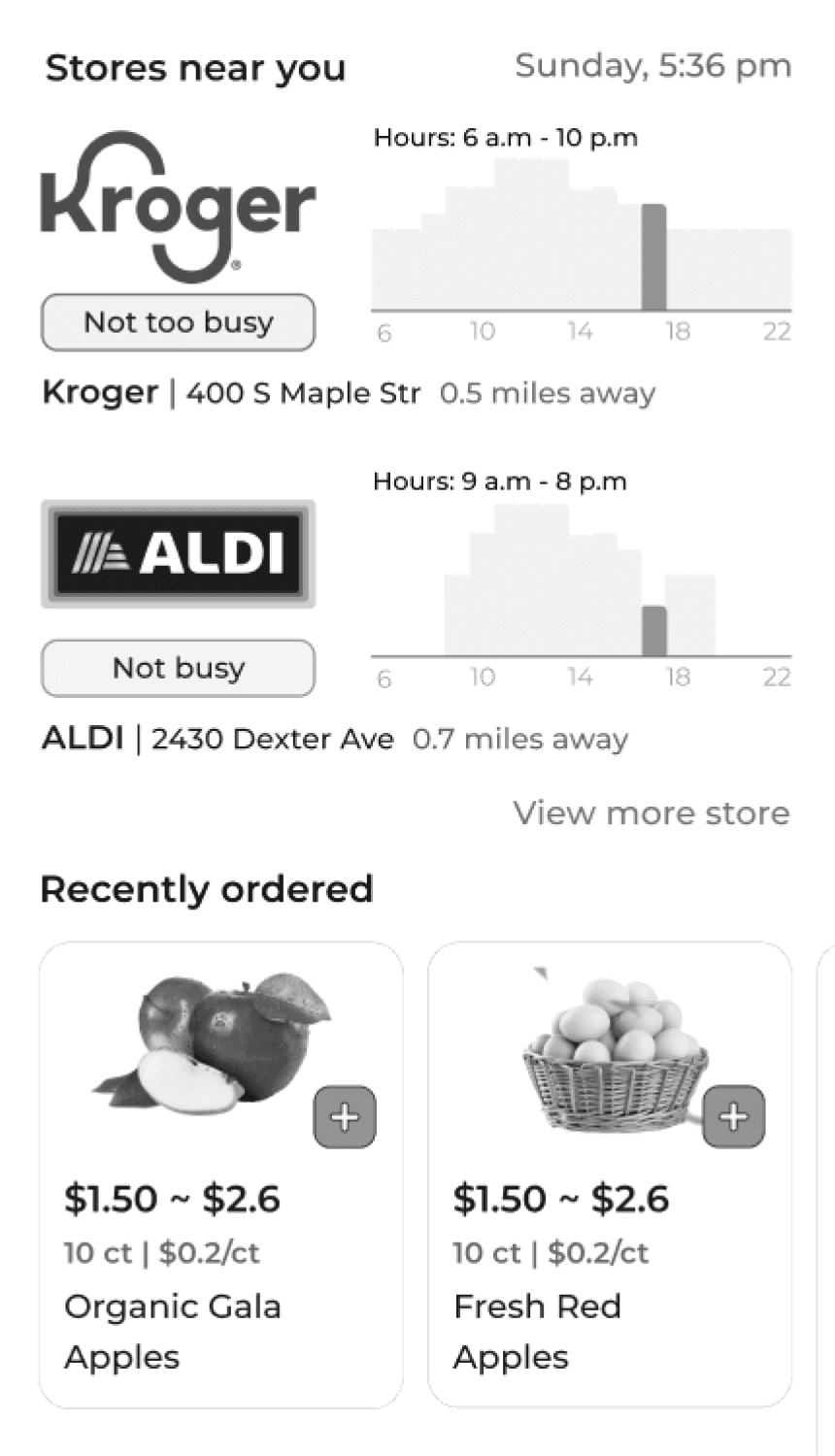
Limited store options displayed
Does not explicitly show how stores compare to each other.
Location & distance information not comprehensive.
Final Design
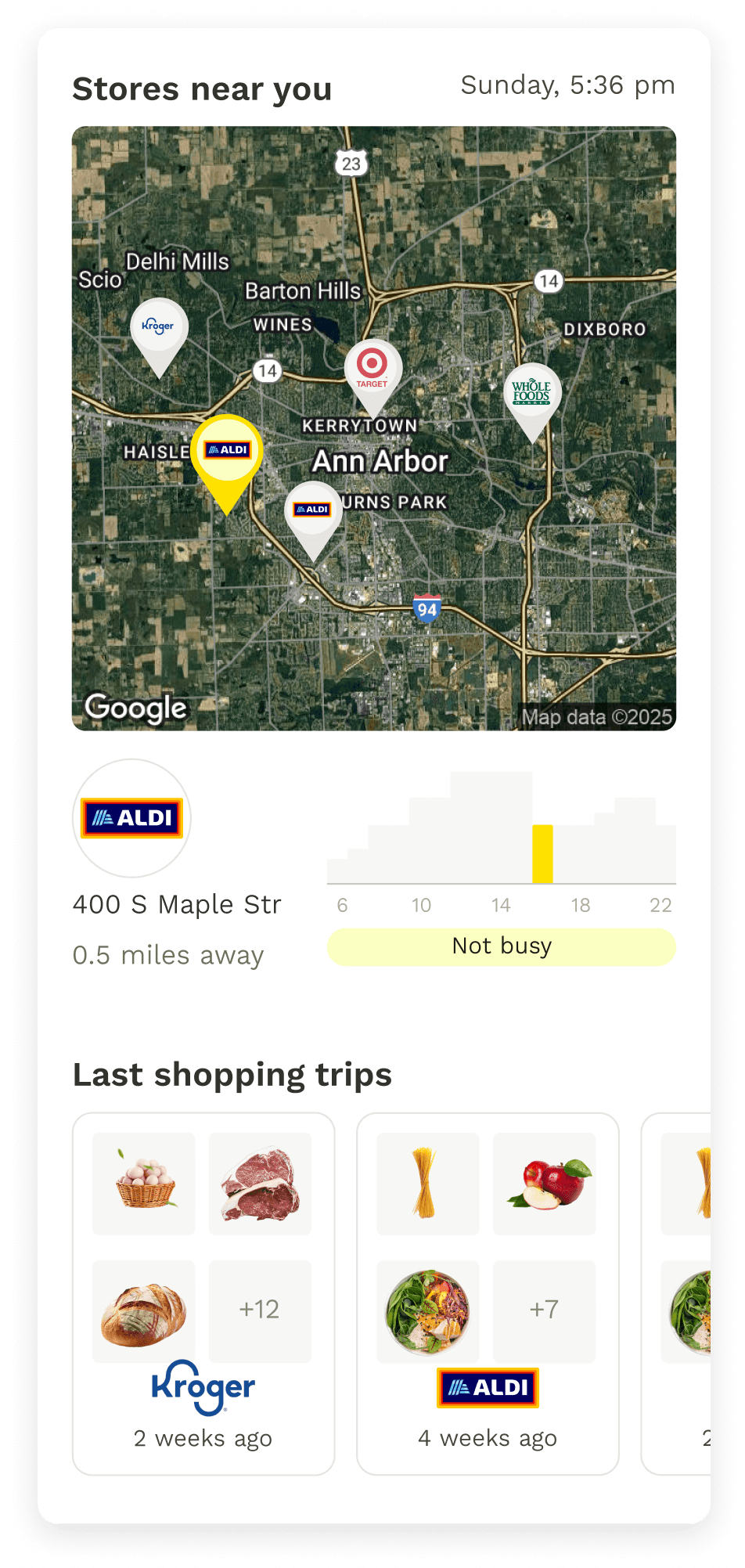
Interactive map of store locations.
User can select stores and view its location and crowdedness accordingly.
Last shopped items displayed in list.
Considering needs when displaying items in shopping list.
Iteration
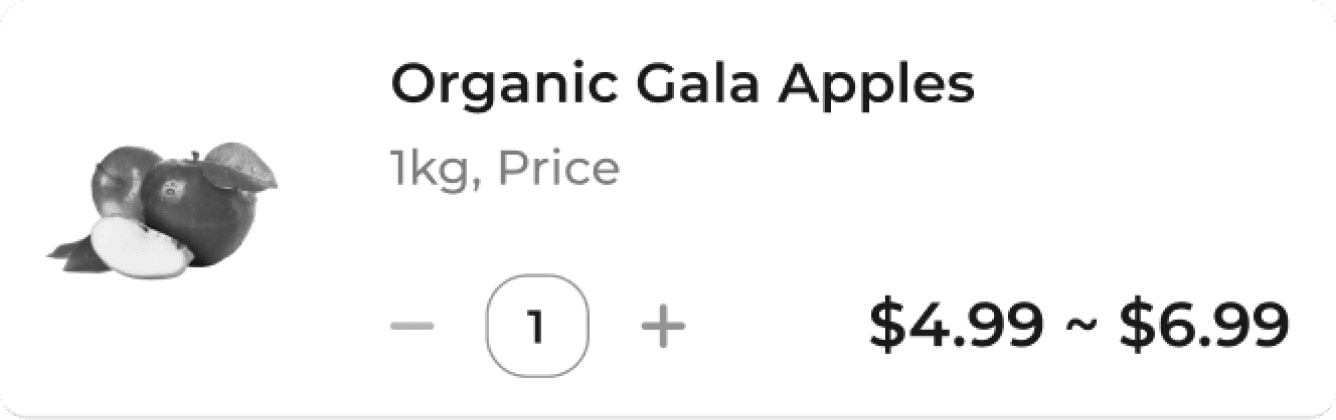
Final Design
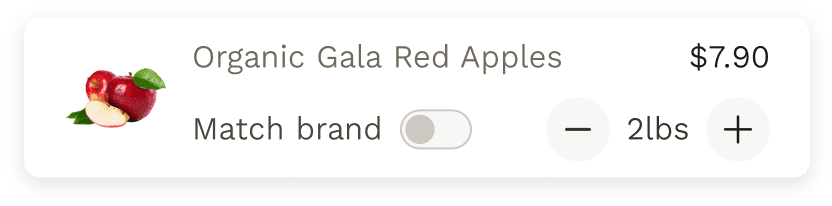
You might care about the brand of cream cheese you want to buy, but not necessary the brand of onions. Select “match brand” to make sure ShopQuest can find the specific items you need.
What is considered “Best match”? Giving users options when recommending stores.
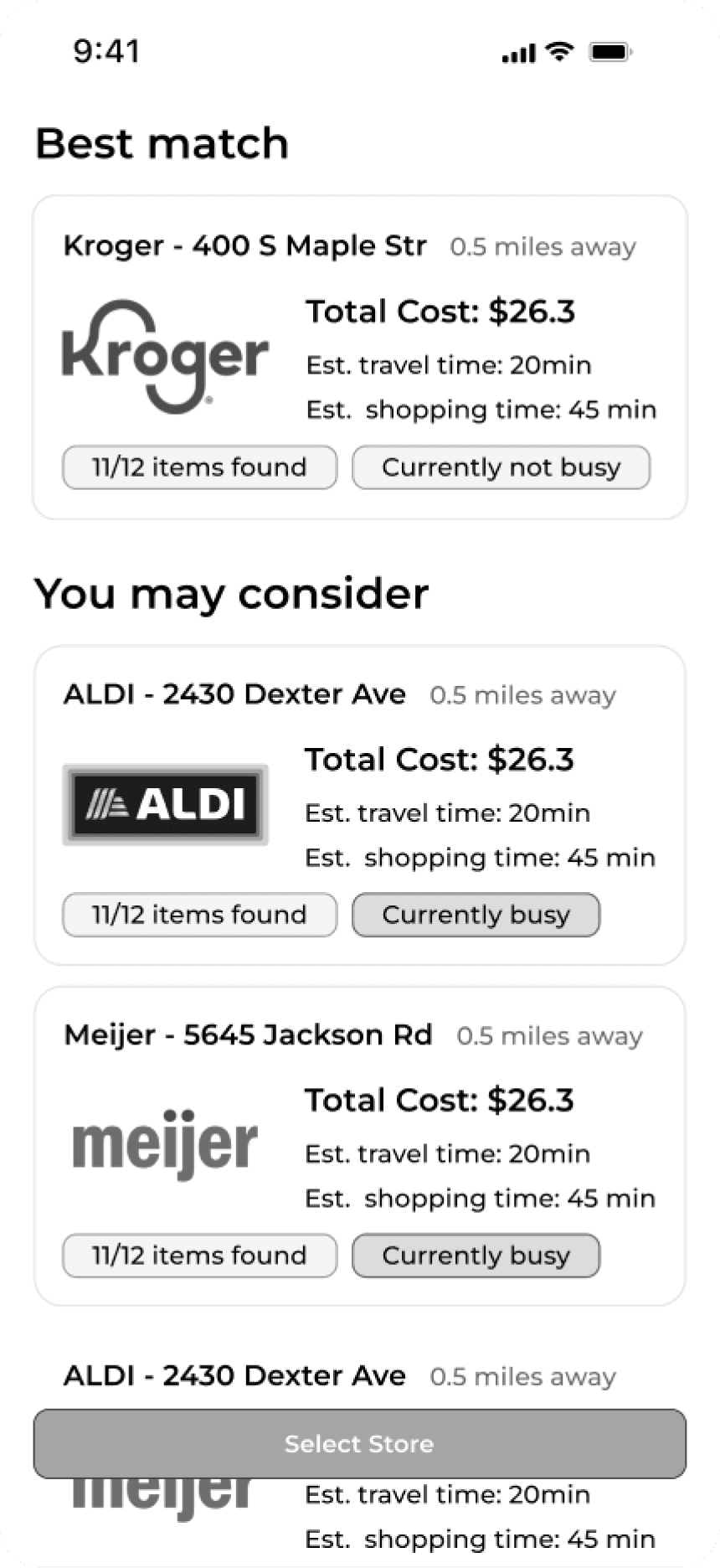
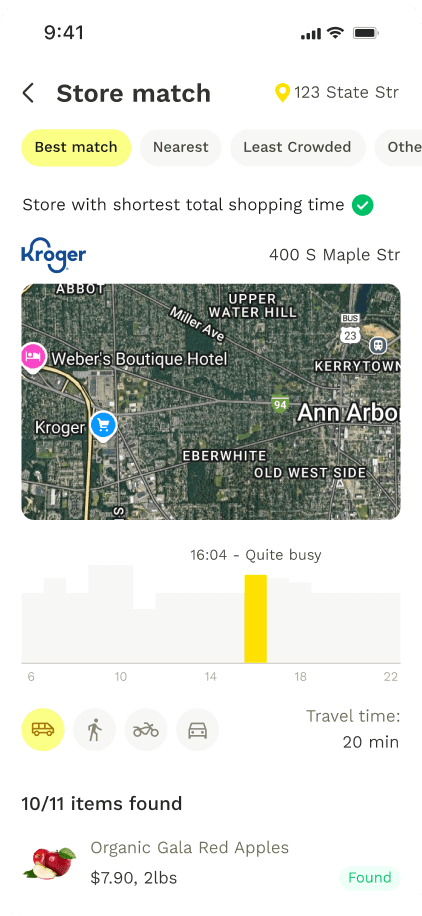
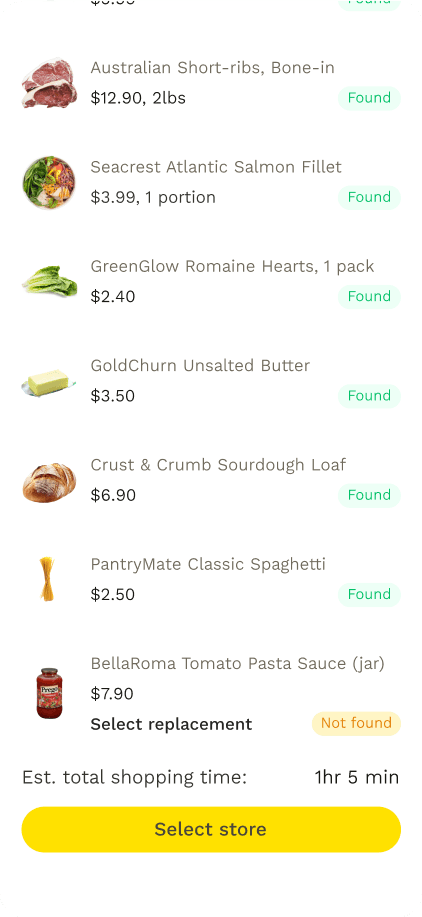
Best match displayed with a top navigation for other options.
List which items are found and not found.
Last shopped items displayed in list.
Focusing on 1 item at a time. Traveling through the store with both guidance and freedom.
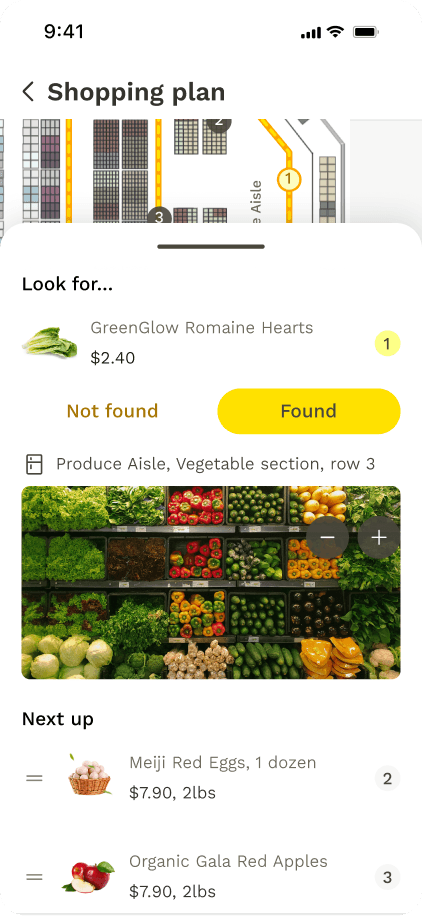
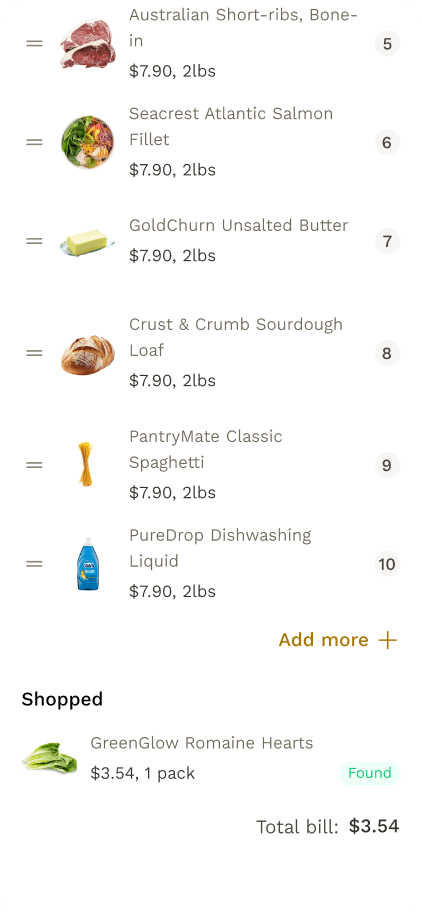

Grid map floor plan clearly showing number of aisles and item’s relative position in a section.
Impact & Contribution
Joining forces with students from the Ross School of Business, I was able to uncovered an unaddressed user problem and create innovative product that unlike any other on the market. Its impact include
Cost 💰 and time ⌛ efficiency
ShopQuest helps its customers save time and money by directing them to the store that best matches their needs, saving travel costs. Having a prepared list also help users stay true to their budget and not miss out on items they need, resulting in multiple trips back to the stores.
Enhanced accessibility 💛
Not only does ShopQuest makes it easier for users to navigate stores, incorporated with text-to-speech and voice-to-text technology, ShopQuest can also be a great assistance for users with special needs.
Business growth 📈
While users save up by purchasing what they need, businesses can also benefit from partnering with ShopQuest. Shoppers can ensure they are not missing out on items, and a faster shopping trip will make the store less crowded, making the shopping experience more pleasant for the next customer!
How this product can be positioned in the market
I envision this product to be more than a grocery shopping assistant for students. It can be a weekend treasure-hunt activity for families with children or a workflow enhancer for online delivery shoppers.


Pitching our ideas to the board
I had a lot of fun pitching this idea in the competition alongside students from U-M Ross School of Business and School of Computer Engineering.
I learned the different sides of a project, how the business intersects with technology and how it can help guide our ideas. Check out the original deck for our pitch.

This brief project gave me plenty to reflect on and a long list of things I’d approach differently next time. Contact me anytime at lammy@umich.edu to chat more about ShopQuest and my experience with the Tech Innovation Jam program!